

Australias continued loyalty to the U.S. alliance is framed as strategic necessity, but increasingly looks like silence in the face of war and declining democratic values, writes DrJudy Hemming.
HISTORY IS BEING kind to the current government of Australia, led by Prime Minister Anthony Albanese. And that is because few governments are presented in their tenure with a clear choice and an unavoidable duty to make a decision.
Specifically, when and how will Australia take the essential steps to remove itself from the longstanding alliance with the United States and undertake the various evolutions required for its national defence as a sovereign country?
This question cannot be answered with the traditional responses that justified the alliance in the past. Those were plausible just but only when encountering poorly mounted challenges; against the growing body of empirical evidence on the alliance, they always had the whiff of half-truths about them.
What makes it unavoidable now are the daily spectacles of American political violence and needless cruelty, which affirm what many analysts and commentators for some years recoiled from concluding but have now judged to be logically necessary: the U.S. is in the grip of a specific form of fascism of its own making.
The state of a (not) independent Australia addressFellow Independent Australians, it is with our greatest and most sincere regret that we must inform you that Australia is still not a fully and truly independent nation.
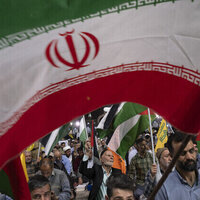
The current manifestation of this is the war now being waged primarily against Iran by the U.S. and Israel. (This, of course, is an abbreviated description since, within the actionreaction cycles of the original attacks by the U.S. and Israel, the theatre of operations has expanded to several countries of the Arabian Gulf, the wider Middle East, and sea lanes extending to the western Indian Ocean.)
In summary form, it is a war of choice by the aggressors, but not only that; it beggars the mind to list its transgressions: unjustified according to thejust war doctrine; illegal under international law and unconstitutional under U.S. law. Its casus belli were imaginary; its objectives contradictory and confused, and its path to termination never articulated.
It brings, nevertheless, the levels of death and destruction that modern weaponry is designed to achieve, and it is a source of massive disruption in the global economy and thus in the daily lives of billions.
In Canberra, the language up to mid-March 2026 was heavy with euphemism and ambiguity, as though the repudiation of what has just been described deserves venturing onto an exercise in semantics. The reason for such contemptible timidity has to do with President Trumps notorious reactions to those who displease him.
Interim conclusion: Australia is intimidated, unwilling to risk the costs of candour.AUKUSis to be partly purchased with silence in the face of atrocity.
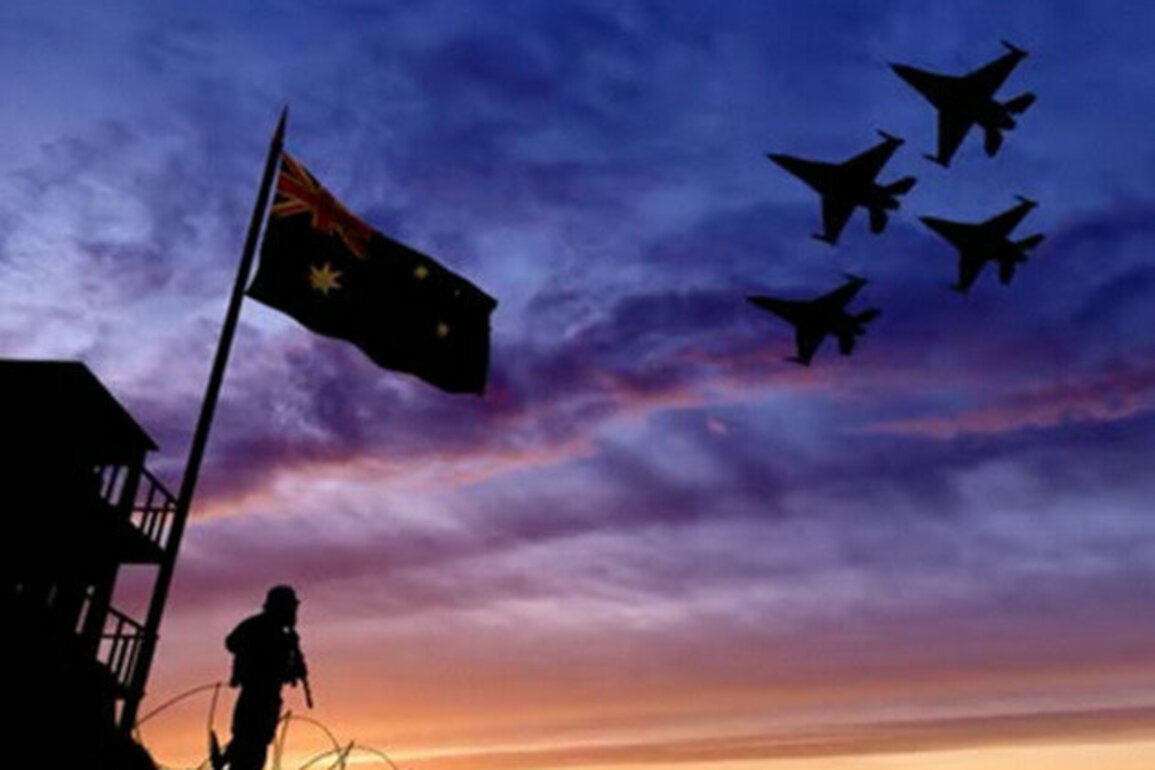
Mid-March, however, brought the suggestion of a sliver of courage. Australia, having dispatched aircraft for defensive roles in the Gulf, declined (along with several U.S. allies) to provide naval forces for the purposes of securing the Straits of Hormuz. Whether this was a decision of principle or determined by the Royal Australian Navys capability is an open question. The hope is that the former dominated.
In Washington, DC and Jerusalem, however, the language being used continued to indicate a disposition to the costs and consequences that is self-delighting which is to say without restraint and obscene.
And casting a glance over the genesis of American hubris and the established long-term trends of political, economic and social forces in the U.S. the tenor of the country there is no real prospect for its potential to disrupt politics on a global scale, for its selfish ends, to change.
Funding firestorms: Washingtons war habit and Canberras silenceAs U.S. and Israeli strikes on Iran escalate, billions flow into conflict while Australia backs the alliance without question.
Also, from the viewpoint of a critical citizen, which is to say a citizen who pays attention and expects political power to justify its actions in the first instance, and then to be held both accountable and responsible for them thereafter, the continued commitment to the alliance is a source of not only mystery, but personal and national embarrassment.
The more so when the question is asked whether the combined dead and wounded in all of the U.S. wars of choice in which Australia contributed are worth the outcomes which, essentially, were defeats, and preordained defeats at that.
It is not as though knowledgeable, thoughtful and historically distinguished Americans have not given the world ample warning of what would happen if their always overhyped political system generously described as a republic with checks and balances should be found guilty of misleading advertising.
Following the conclusion of theConstitutional Conventionin 1787,Benjamin Franklinwas asked byElizabeth Willing Powelwhether the outcome of the deliberations was to be a monarchy or a republic. There was an awareness perhaps prescience of the fragility of the new political order when the reply was: A republic, Madam, if you can keep it.
It is worth pausing to reflect on this event (the Convention) as a precedent for what followed in the alliance relationship: declarations of principle and fact that, even a cursory interrogation would render fantasy and the corresponding willingness of Australian political leaders to believe them, or to find them fit for the purpose of mass persuasion of the population.
The Convention, with all of its republican raiments, was both a pivotal event and a document of monstrous hypocrisy signed by the so-called and loosely defined Founding Fathers; among these champions of liberty were the aforementioned Franklin,John Hancock,Patrick Henry,Thomas Jefferson,James Madison,George Mason,James Monroe, andGeorge Washington, who, between them, owned at least 1,000 slaves. The record shows that12 U.S. presidentsowned slaves at some point in their lives.
The purpose of this vignette is to establish an arbitrary base for an understanding essential for we the people in middle and lesser powers like Australia, because governments are insistent on both manufacturing threats and idealising the protectors that all are told they need. The vignette, then, is provocation, a reminder to think independently.
Pressure mounts on Australia to distance itself from Iran warEven as the war with Iran escalates and threatens global oil supplies and economic stability, critics argue Australia should distance itself from the conflict rather than risk deeper involvement.
So disposed, PresidentDonald Trumpis not a surprise. While slavery in the U.S. was transformed into other obscene forms of paranoid discrimination (as brilliantly chronicled in the works byRichard Hofstadter), the drumbeat of Australias subservience to the U.S. was constant. Unquestioning loyalty made voluntary sight, sound and audio impairment de rigueur long after the passing of theStatute of Westminster (1931)and theStatute of Westminster Adoption Act (1942).
For the Australian political leadership, however, the years of the alliance since 1945 were, for the most part, experienced as though in a sleepwalk. Even when presidents occasionally warned their own country and the world that domestic forces were a threat, there was no recognition that what are now called inflection points were imminent, or indeed, might have been reached.
It was as though World War II had renderedFranklin Delano Roosevelts 1938harsh warningsomehow irrelevant:
It was a foolish dismissal given PresidentDwight D Eisenhower's farewelladdressto the nation in 1961 in which he delivered yet another warning this time of the dangerous influence that a permanent military-industrial complex could have on democratic politics:
Yet the sleepwalk continued and honesty demands that Eisenhower himself was hardly innocent of contributing to the presidential legacies which, over time, created a permissive environment for deadly and dangerous American adventurism.
U.S. economic dominance: Why we must break freeAustralia is rich in resources but poor in outcomes becauseour biggest industries are owned by the U.S.
What is so striking is that the components of this legacy are real and historically verifiable, and not the stuff of an outlandish novel.
Among those that would have to be included in the success narratives of the various presidents, and/or in the record of their time in office are:
- the known role of the mafia/the mob;
- cognitive impairment of the president;
- voter fraud;
- deliberate dishonesty concerning the Soviet threat;
- repudiation of international agreements leading to war and the disregard for international law in general;
- encouragement of war by other parties to Americas advantage;
- support for authoritarian and fascist regimes;
- toppling of democratically elected foreign governments;
- entering into agreements in bad faith;
- unconstitutional and illegal initiatives warranting impeachment;
- deliberate deceit with regard to reasons given for the recourse to wars; and
- the refusal to acknowledge the constitutional constraints on the president of theWar Powers Act/Resolution.
Although many of the above apply to President Trump, the obvious is conceded: he is a special case of corruption and political pathology and even the mainstream media have been slowly and begrudgingly coming around to this conclusion some, after much handwringing, also concluding the fascist tenor of his administration.
To this point, none of the above seems to matter. Australias political leadership finds silence to giving voice the preferred policy. Why? If Australias declared interests and values are to be taken seriously, then the alliance with the U.S. is beyond illogical; it is a threat and has been for longer than most care to admit.
If sovereignty has content and that content is an obligation to practise independence, then surely the time has come to counterDonald Hornes decades-old derision and sever the umbilical cord with the U.S. so that Australia might still beThe Lucky Country, but no longer governed by second-rate politicians.
DrJudy Hemminghas researched and taught extensively in the areas of Sociology, International Relations and Strategy.
Related Articles
- Australia must break ties with U.S. on defence