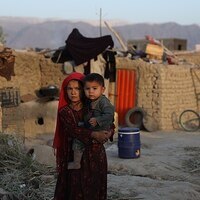



As Nashville’s population grows, homelessness is also rising, and local groups are working to help close the gap.
More than 400 families in Davidson County are unhoused, pushing service providers to expand their reach.
Ryan LaSuer, executive director of Community Care Fellowship, said a federal American Rescue Plan grant from Metro Nashville helped his organization grow its Family Mobile Housing Navigation Center, which tries to move people quickly from crisis situations into stable housing. He said the model uses church facilities and community spaces near encampments, making it easier for staff to meet families where they are and connect them with long‑term support.
"We actually opened up in seven different spaces throughout the community over that two-year grant period," he said, "where we renovated church space to make it functional, to serve as temporary housing."
He noted that the Family Mobile Housing Navigation Center can now accommodate up to nine large families at a time. The center can serve 46 people at a time, or as many as 184 people each year. The services offered include meals, laundry and shower facilities, job placement and training support, child-care assistance and homework help for kids.
LaSuer highlighted a new program, "Home Together Nashville" – a pilot initiative in partnership with the Community Foundation, Westminster Presbyterian and the Titans Foundation. It supports Metro public school students and their families who are facing hotel stays and paycheck-to-paycheck struggles. Ryan said it aims to disrupt their cycle of housing insecurity before they ever enter a shelter.
"We will start taking referrals from the HERO Program – so, Metro public students that are experiencing homelessness – and we will start walking alongside them and connecting them to resources to prevent them from falling into homelessness, literal homelessness," he said, "and so it's the preventive side."
LaSuer said the long-term goal is to use church-owned land and property to develop mixed-income housing. They're exploring partnerships that would allow them to serve residents making from 30% to 80% of the area median income, and create opportunities for upward mobility. They're now in discussions to identify which church properties could be suitable for this type of development.
Source: Public News Service